Five Famous Paintings Hiding in Your Tarot Deck
You have seen them in museums. You have shuffled them, too. Let's play spot the card.
Here's a secret: tarot and Western painting grew up in the same house. The first tarot cards were hand-painted in 15th-century Italy, for the same rich families who were hiring painters for everything else. So they share a visual language. Same gods, same symbols, same drama.
Which means once you know the cards, museums get very funny. Here are five famous paintings that are basically tarot cards in disguise. Nobody told them. We're telling you.
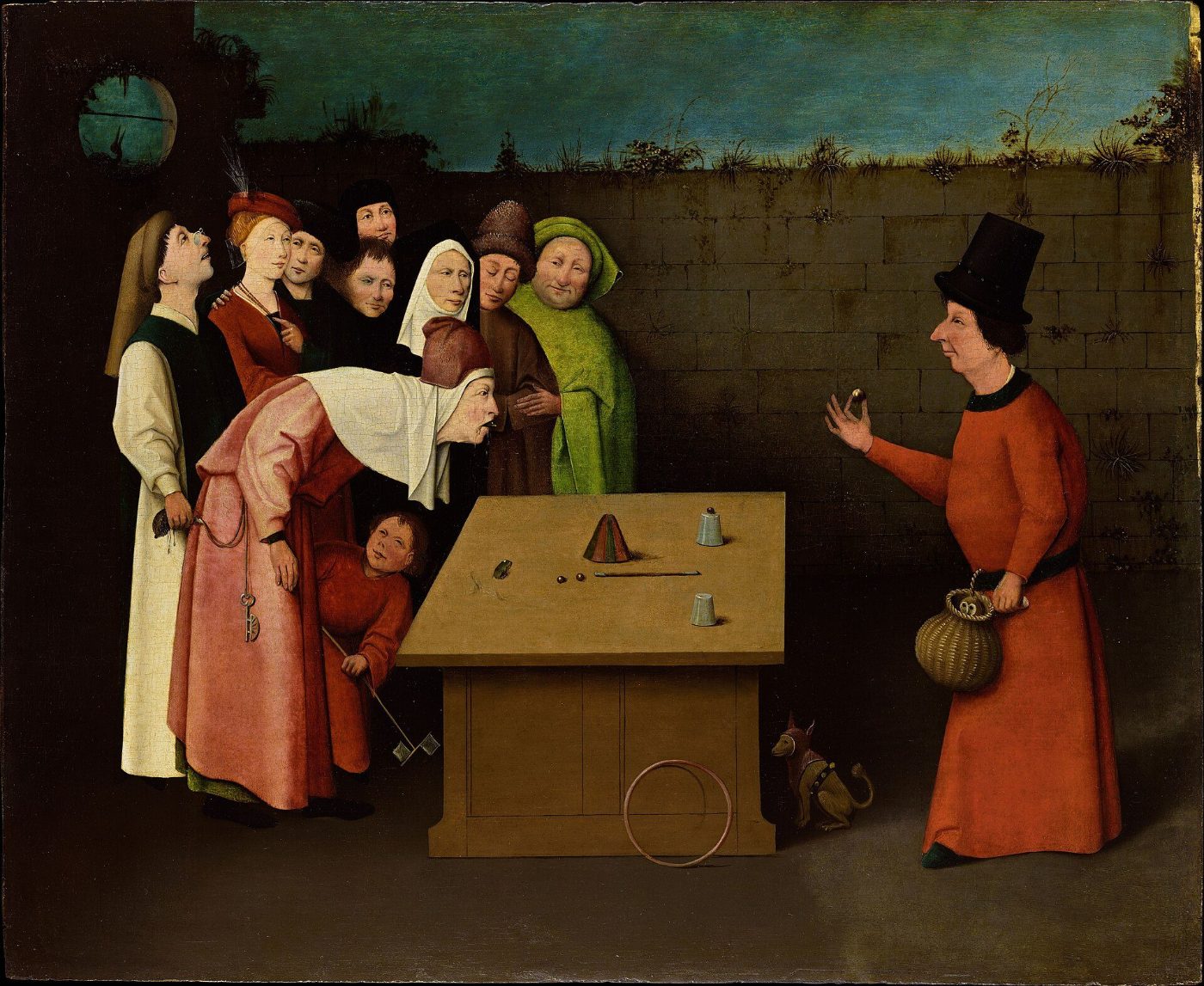
1. The con man who is The Magician
A man at a little table, doing the cups and balls trick. A crowd leaning in. If you've seen a Tarot de Marseille deck, you already know him: the first card there is Le Bateleur, a street performer with cups on his table. The old Italian name, Il Bagatto, probably comes from a word for little tricks and trifles.
Now look behind the man leaning in the hardest. Someone is lifting his purse. The trick was never on the table.
- A table full of tools. In the Rider–Waite deck, it holds all four suits: cup, wand, sword, coin.
- All eyes on one person who knows exactly where your attention is.
The tea: The Magician isn't "magic powers". It's focus, skill and timing. Use it on yourself before someone else uses it on you.
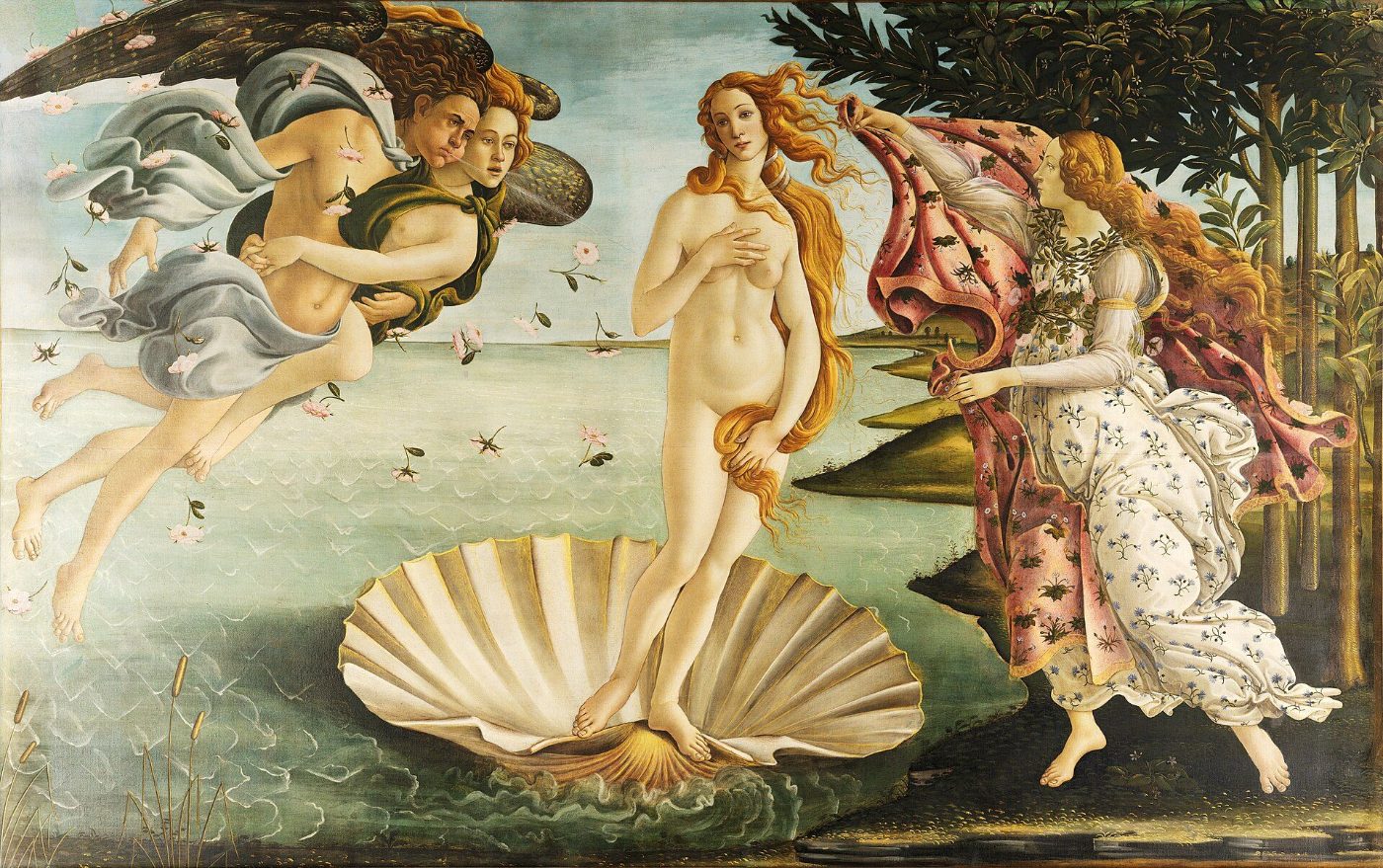
2. The goddess who is The Empress
Venus arriving on a scallop shell, hair everywhere, zero apologies. In the Rider–Waite deck, The Empress has the symbol of Venus, ♀, right on her heart-shaped shield, and in the classic system of matching cards to planets, her planet is Venus. So yes. This is her origin story.
About that origin story. In Hesiod's version, Venus (Aphrodite) is born from sea foam. And the foam came from the god Uranus's... body parts, which his son Cronus had just cut off and thrown into the sea. Botticelli politely left that bit out. We will not.
- Nature everywhere: wind, flowers, sea, a cloak covered in blossoms. The Empress is the card of abundance and the body.
- Pleasure as a birthright, not a reward.
The tea: The Empress doesn't earn rest. She grows things by resting. Take the bath.
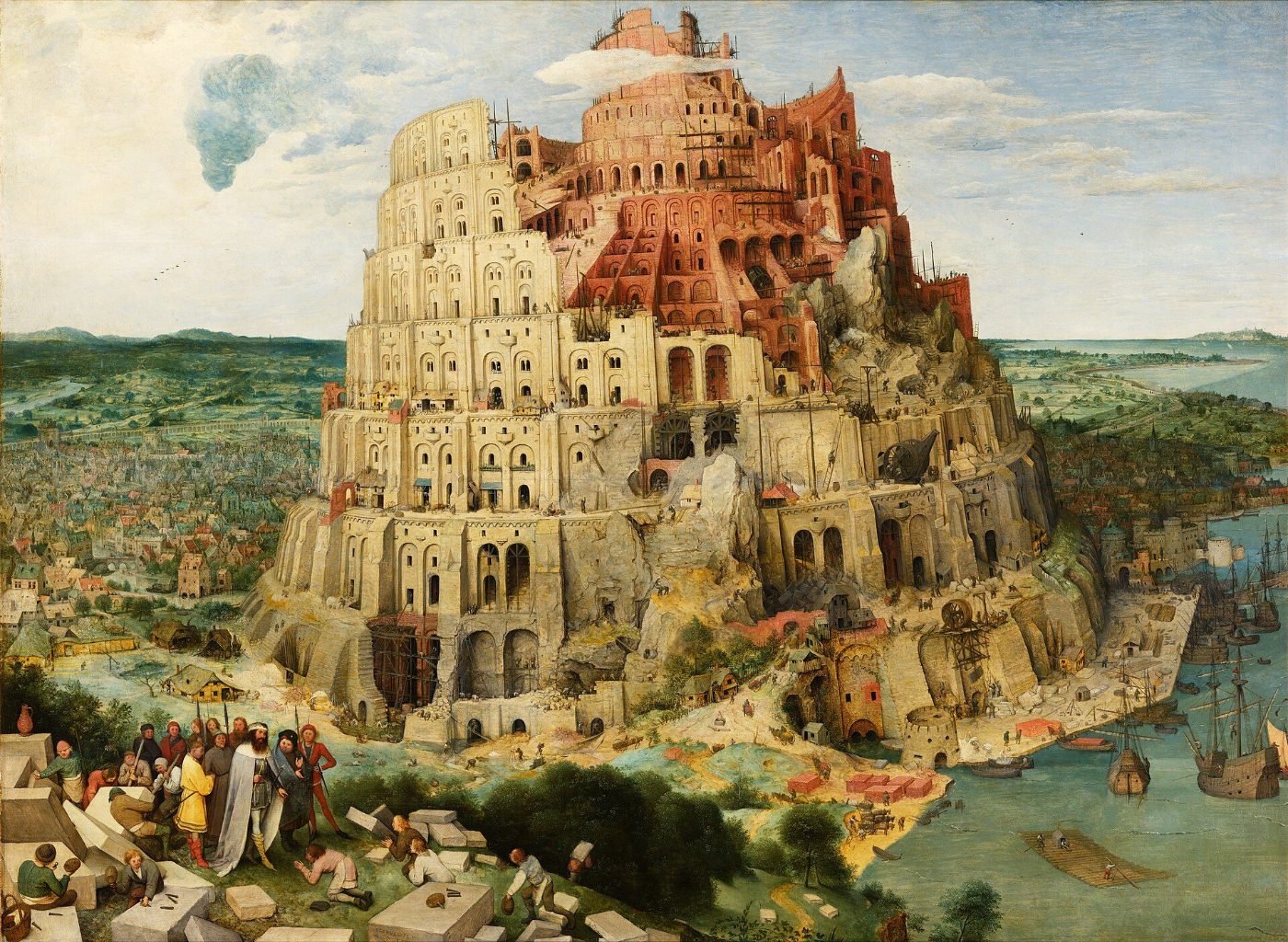
3. The doomed skyscraper that is The Tower
In the Bible story, people build a tower to reach heaven, and God answers by scrambling their languages so they can't work together anymore. Bruegel paints it as the world's most ambitious construction site. Tiny workers, cranes, ships, a king inspecting the work. Look closer and the arches are already cracking. The whole thing leans.
Tarot's Tower card shows a tall building hit by lightning, with people falling out. In the Marseille deck it's even called La Maison Dieu, the House of God. Many readers see Babel in it: a structure built on ego, coming down.
- A tower too tall for its foundations.
- Everyone very busy, nobody asking if it's a good idea.
The tea: The Tower is the scariest card in the deck, but it only knocks down what was already cracked. That job you hated? That relationship held up with tape? Lightning is a kind of honesty.
The Tower only knocks down what was already cracked.
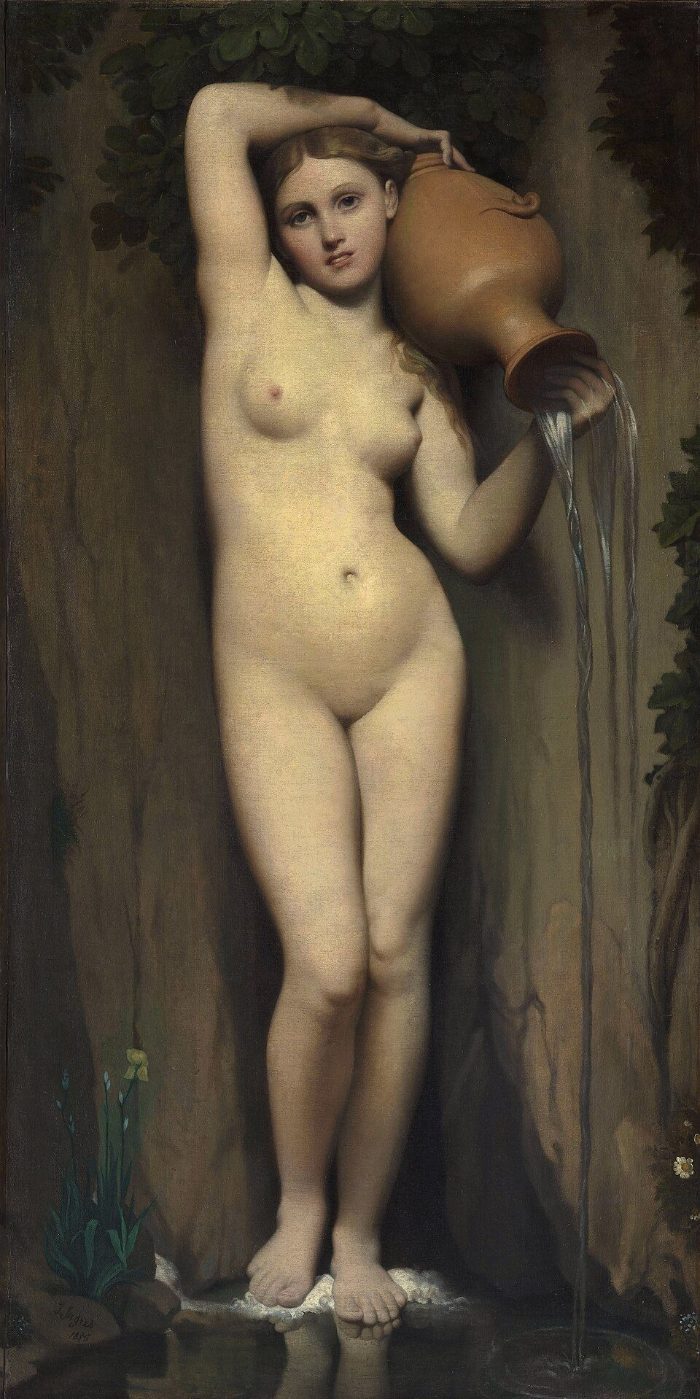
4. The naked girl with a jug who is The Star
The Star card: a naked woman by a pool, pouring water from jugs, under a big bright star. Ingres's The Source: a naked young woman, pouring water from a jug, by a pool. We rest our case.
Fun fact: Ingres started this painting when he was about forty and finished it at around seventy-six. More than thirty years on one jug. Which is honestly the most Star-card thing about it. The Star is the card of slow healing. Hope that doesn't rush.
- Nudity, but not the sexy kind. The unguarded kind. Nothing left to hide.
- Water flowing freely, like something that was blocked is moving again.
The tea: The Star comes right after The Tower in the deck. First the lightning, then the quiet. You are allowed to take thirty years.
5. Two guys staring at The Moon
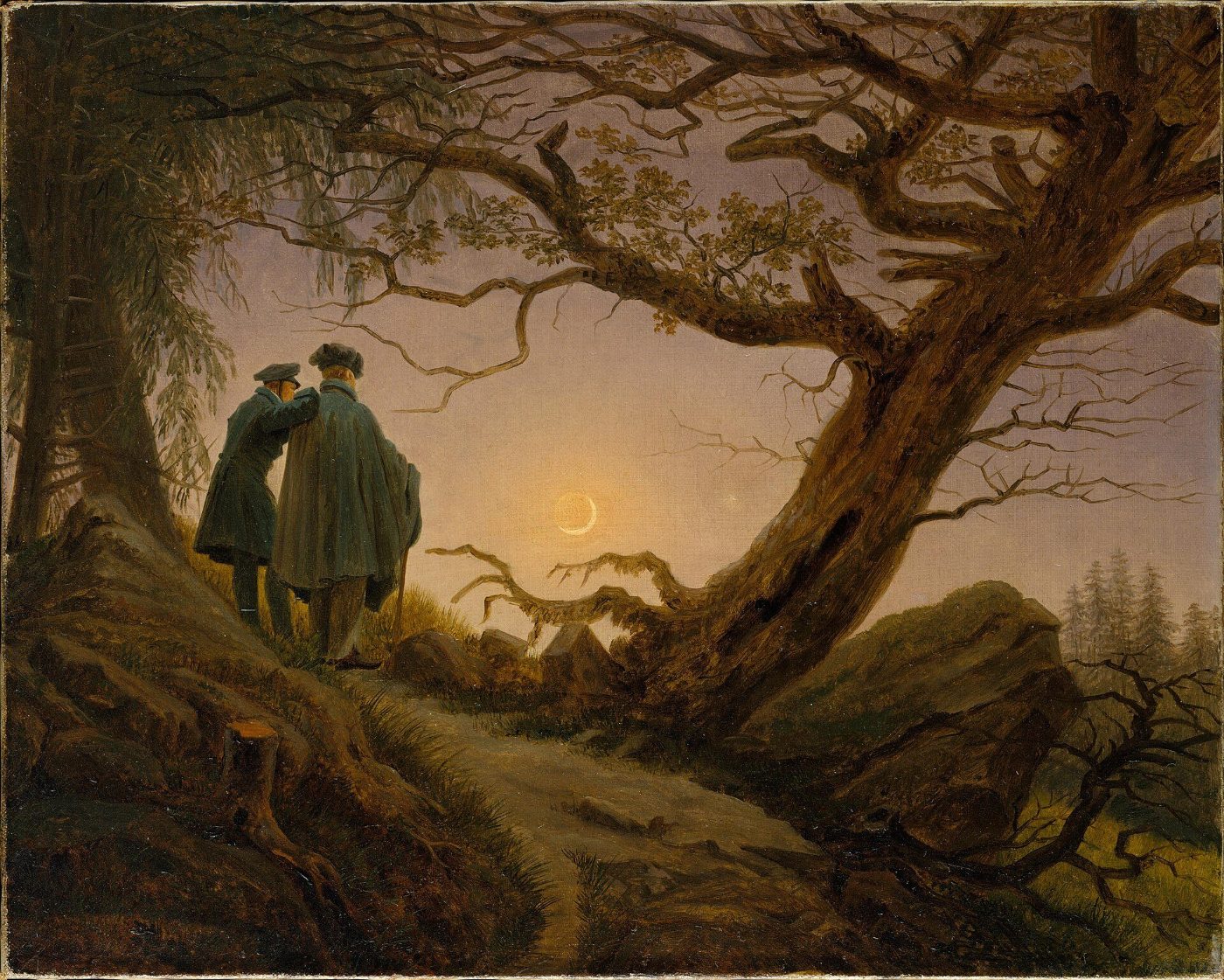
Two figures on a path at night, a crescent Moon, spooky twisted trees, rocks. The Moon card: a path at night, two animals howling at the Moon, a dog and a wolf, two towers, and a crayfish crawling out of a pool.
Friedrich's two men are standing exactly where the dog and the wolf stand: at the edge of the known, looking at something they can't quite read. The tame part of you and the wild part of you, side by side, both a little lost. And the playwright Samuel Beckett reportedly named Friedrich's moon-gazers as a source for Waiting for Godot, the play where two men wait for someone who never comes. So, a situationship. Again.
- A path you can't fully see the end of.
- Moonlight: beautiful, real, and terrible for reading the details.
The tea: The Moon says your feelings are real, but your facts might not be. Don't send the 2 a.m. text. Wait for daylight.
Pull your painting
Take a breath. Ask: what do I need to see today? Then tap.
THE MOONWant the whole museum? The Night Museum is our tarot reading room for your phone: all 78 cards painted as famous artworks, with a curator's note for every reading.
See you at the museum,
Karmically Bonded